Boundary restarts: who touched the ball last?
Most stoppages are not punishments at all—the ball simply crossed a painted white line. Across football, basketball, and rugby, one universal rule handles almost every out-of-bounds moment: possession goes to the team that did not touch the ball last before it went out.
In football (IFAB rules), a ball crossing the side touchline restarts with a two-handed overhead "throw-in". Crossing the end line behind the goal brings two different restarts depending on who touched it last: if the attacking team knocked it out, the goalkeeper takes a "goal kick" from inside the small box; if a defender deflected it behind their own line, the attackers receive a dangerous "corner kick" from the corner flag. In rugby union, kicking or carrying the ball over the side line produces a "lineout", where forwards line up in two parallel tunnels and lift a jumper to catch the throw.
Yellow cards, red cards, and rugby's sin bin
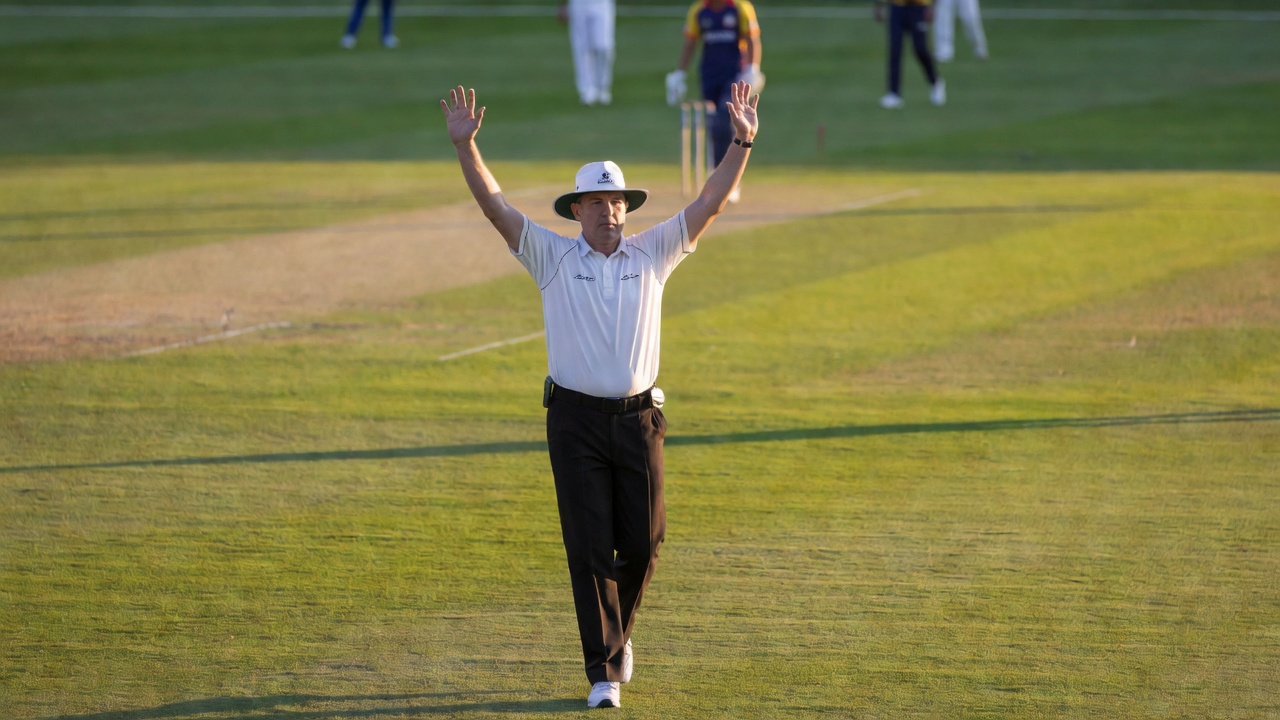
Officials like legendary Italian referee Pierluigi Collina showed how clear body language keeps matches fair. In football, a careless trip or shirt pull earns a free kick for the other team—or a "penalty kick" from twelve yards if the foul occurs inside the defender's rectangular penalty area. For reckless tackles, deliberate time-wasting, or pulling back a promising attack, the referee holds up a yellow card, which is an official caution. Receiving a second yellow card in the same match turns into a red card. A red card—which can also be shown immediately for violent conduct or denying an obvious goal—sends the player off for the rest of the match without a replacement, leaving their team short-handed.
Rugby union uses the same two colours with one vital twist. A yellow card sends the offending player to the sideline "sin bin" for ten minutes of match time before they are allowed back on, while a red card removes them permanently (or triggers a 20-minute red-card replacement window in competitions adopting World Rugby's updated trials).
Basketball violations versus personal fouls
Basketball whistles separate technical mistakes ("violations") from illegal physical contact ("fouls"). If a player takes too many steps without bouncing the ball ("travelling") or dribbles with both hands at once ("double dribble"), the referee blows the whistle and awards the ball to the other side from the nearest sideline—no personal penalty is recorded.
Physical contact such as slapping a shooter's arm or stepping into a dribbler's path without planting both feet first is a personal foul. Under FIBA rules, a player who commits five personal fouls must leave the game ("foul out"); in the NBA, the limit is six. Teams also accumulate "team fouls" each quarter: once a defending team crosses the bonus limit, every non-shooting foul automatically sends the opponent to the free-throw line.
Understanding offside without drawing trigonometry
Offside in football sounds infamous, yet its purpose is simple: stop attackers from standing permanently beside the opponent's goalkeeper waiting for long kicks. An attacker is in an offside position if any scoring part of their body (head, torso, or feet—not arms) is closer to the opponent's goal line than both the ball and the second-last defender at the exact instant a teammate passes the ball. You cannot be offside in your own half, or directly from a throw-in, corner kick, or goal kick. When an assistant referee raises their flag straight up, play stops and the defending team restarts with an indirect free kick.
How video reviews work: VAR, TMO, and Hawk-Eye
Modern stadiums use camera technology so clear mistakes do not decide finals, though each sport limits when replays can interrupt the flow:
Video Assistant Referees check only four match-changing areas: goals, penalty decisions, direct red cards, and mistaken player identity.
High-speed tracking cameras calculate whether a ball clipped the chalk line by even a millimetre, replacing human line calls at major tournaments.
The Television Match Official advises the referee on try groundings and dangerous tackles—and you can hear their microphone conversation live on television.
What does "playing advantage" mean when the referee spreads both arms?
If a team gets fouled but still keeps the ball in a great attacking spot, the referee gestures forward instead of blowing the whistle immediately. Stopping play would actually help the team that broke the rule.
Why do NFL referees throw yellow fabric flags onto the grass?
In American football, throwing a weighted yellow penalty flag marks the exact spot of an infringement without halting a live play that might still gain yards for the fouled team. Once the play finishes, the referee explains the penalty over the stadium microphone.