How to read a football formation in ten seconds
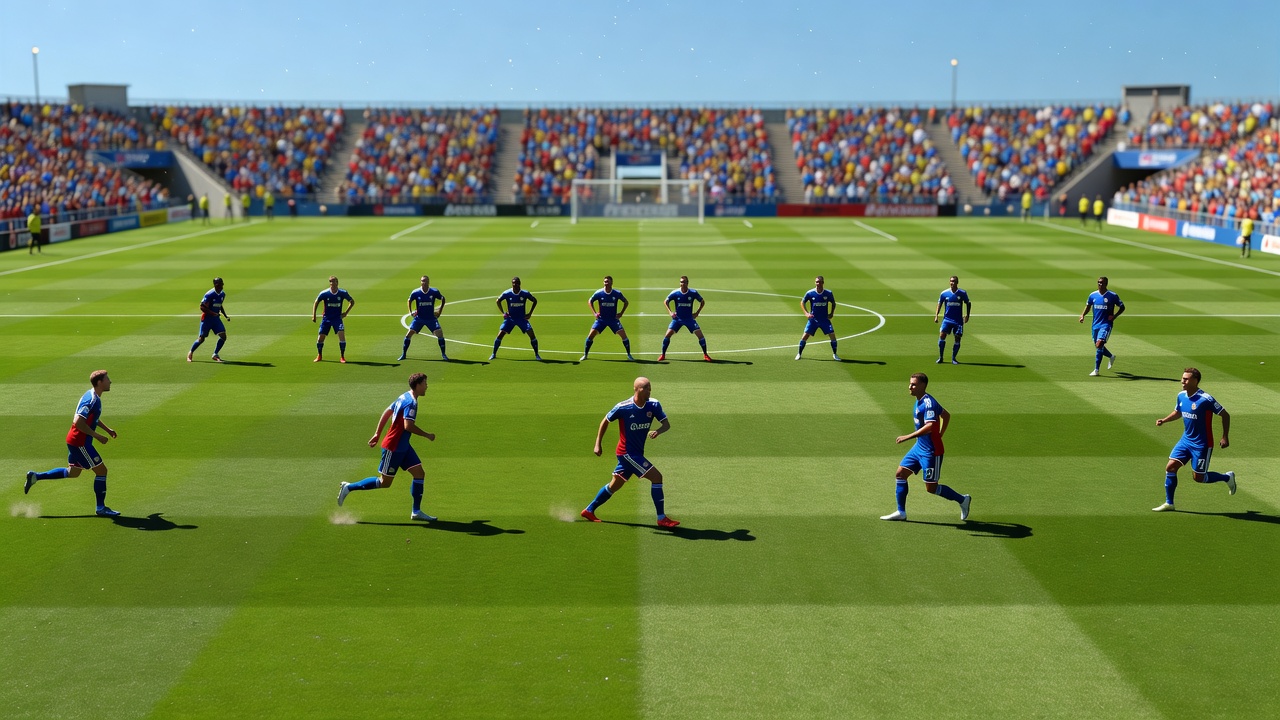
Before kick-off in a UEFA Champions League or Premier League broadcast, a graphic flashes three numbers such as 4-3-3 or 4-4-2. Ignore the goalkeeper for a moment because every team has exactly one; those three numbers count the remaining ten outfield players from back to front. A 4-3-3 means four defenders closest to their own goal, three midfielders operating in the central engine room, and three forwards leading the attack.
The goalkeeper is easy to spot in a contrasting jersey and padded gloves, and is the only player allowed to touch the ball with their hands—strictly inside their own rectangular penalty area. Ahead of them, two "centre-backs" block central shots and win headers, while two "full-backs" patrol the left and right touchlines. Under modern managers like Pep Guardiola, full-backs often step into midfield when their side has possession, which is why formations shift like elastic bands rather than rigid chessboards.
Midfielders connect everything. One usually sits deeper to break up opponent attacks, while another pushes forward to thread passes behind the defence. Up front, a central "striker" hunts for goals inside the penalty box while wide "wingers" stretch the opposition by sprinting down the flanks.
Five basketball jobs on a smaller stage
With only five players per team on court under FIBA and NBA rules, basketball positions are easy to recognise by height and ball-handling duties—though modern stars blur those lines cheerfully. The "point guard" is typically the primary ball-handler who dribbles across half-court and calls the opening play, like a conductor directing an orchestra. Beside them, the "shooting guard" moves around teammates to catch and release long-range jump shots.
The "small forward" is the all-rounder who guards fast wings and drives toward the hoop, while the "power forward" brings physical strength near the painted lane. Closest to the basket stands the "centre"—often the tallest player on the floor—who blocks shots, grabs missed attempts ("rebounds"), and screens defenders out of the way. Versatile modern centres like Nikola Jokić also pass like point guards, proving that positions describe starting responsibilities rather than strict fences.
Rugby union: forwards do the heavy lifting, backs chase open grass
Rugby union fields fifteen players per side, and the numbers printed on their backs tell you their exact position from 1 to 15—a gift for first-time viewers. Numbers 1 through 8 are the "forwards", usually broader and heavier athletes who wrestle for possession in scrums, lift teammates high into the air during lineouts, and barge into tackles to gain hard metres.
Numbers 9 through 15 are the "backs", built for acceleration, kicking accuracy, and sharp sidesteps. Keep an eye on number 9 (scrum-half), who digs the ball out from the pile of bodies and zips it to number 10 (fly-half), the team's chief decision-maker. Out on the edges stand the wings—made famous globally by legends like Jonah Lomu—who finish sweeping passing moves in the corners, while number 15 (full-back) lingers deep as the last line of defence against high kicks.
Why American football swaps entire squads
New spectators watching the Super Bowl are often startled when eleven players jog off the field and eleven completely fresh teammates run on. Unlike football or rugby, where the same athletes must defend and attack, American football uses specialist platoons. The "offence" takes the field when the team owns the ball, led by the "quarterback" who receives the snap and either hands the ball to a "running back" or throws it downfield to "wide receivers" and "tight ends", while five heavy "offensive linemen" form a protective wall. The moment possession changes, the "defence" trots on to tackle, intercept passes, and hurry the opposing quarterback—and a third "special teams" unit handles kickoffs, punts, and field goals.
| Role Type | Football (11) | Basketball (5) | Rugby Union (15) | American Football (11 on field) |
|---|---|---|---|---|
| Last-Line Guardian | Goalkeeper (1) | Centre (5) | Full-Back (15) | Free Safety |
| Play Organiser | Central Midfielder | Point Guard (1) | Fly-Half (10) | Quarterback |
| Wide Speedster | Winger | Small Forward (3) | Wing (11 / 14) | Wide Receiver |
| Physical Anchor | Centre-Back | Power Forward (4) | Props & Locks (1–5) | Offensive / Defensive Line |
Role terms you will hear commentators repeat
What is a "sweeper keeper" in football?
A goalkeeper who regularly steps far outside their penalty box to intercept long passes behind the defence, acting like an extra defender when their team pushes high up the pitch.
What is a "sixth man" in basketball?
The first substitute off the bench. Coaches often save a high-energy scorer for this role so the team's tempo stays sharp when starters rest.
What does "captain" mean during a match?
One designated player—often wearing an armband in football—who attends the pre-match coin toss and speaks calmly with the referee when major decisions need clarification.